Written by: Mahmoud Demerdash
Date: 2026-06-24
The Man Who Walks with Egypt
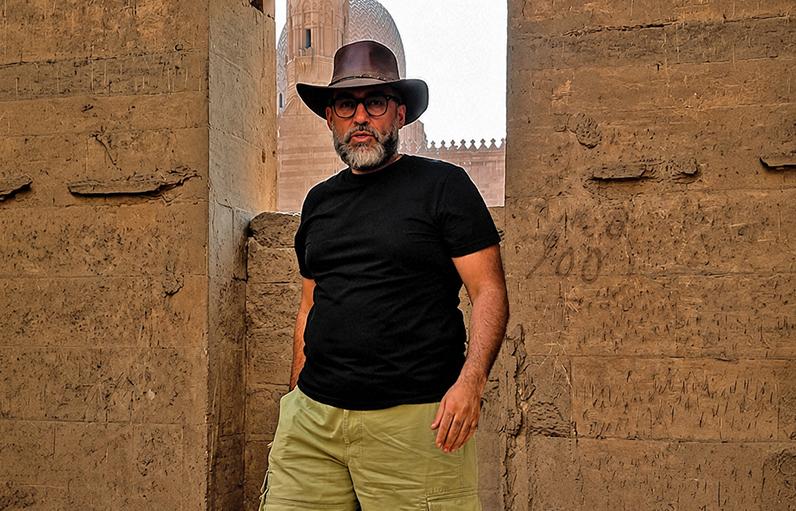
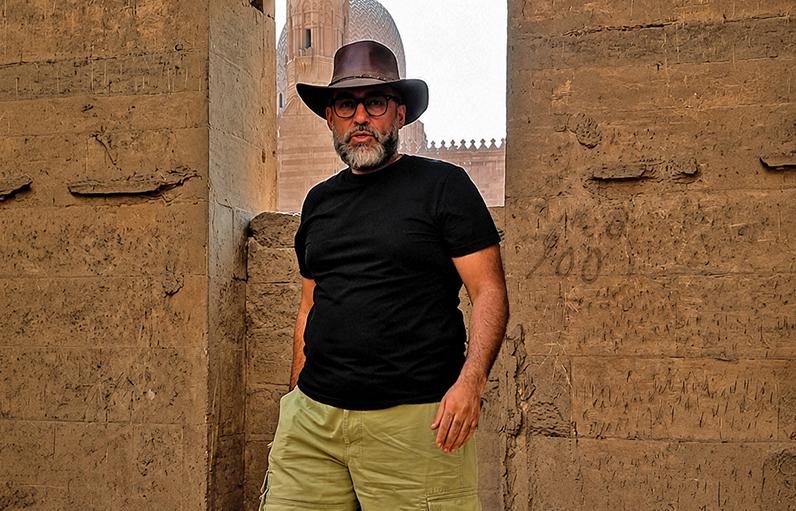
There is a particular kind of man in Cairo who is difficult to write about, not because there is too little to say, but because there is almost too much, and because the man himself seems wholly uninterested in being written about at all. Tarek Mahmoud El-Gindy is that kind of man. He does not seek the spotlight. He operates, by disposition and by habit, several steps behind the cameras and well away from the podium. And yet, when you begin to trace the arc of his career and map the scale of what he has built, you find that this quietly spoken engineer and entrepreneur has left his fingerprints on an extraordinary number of the projects that define modern Egypt.
I first encountered Tarek not through a press release or a formal introduction, but on foot. I had been assigned to write about ‘Walk with Tarek’ for He Magazine, his Friday ritual in which he moves through the layered streets and forgotten courtyards of Old Cairo with a small group of friends, dignitaries, and anyone with a genuine curiosity about the city. I joined one of those walks, notebook in hand, expecting a pleasant heritage outing. What I got was something harder to categorise; two hours in the company of a man who sees Cairo the way an architect sees a blueprint, with complete fluency, deep affection, and an eye for what most of us simply walk past without seeing. That morning stayed with me. And it sent me down the path of trying to understand exactly who Tarek El-Gindy is when he is not walking.
A Career Built Brick by Brick
Tarek El-Gindy graduated at the top of his class at the American University in Cairo, not once but twice. First with his bachelor’s degree in construction engineering in 2002, then again with his master's in 2004. Those who know him say his academic excellence was never surprising; he has always been the kind of person who does not do anything halfway. What may surprise those who only encounter him formally or casually strolling past a Fatimid mosque is the sheer institutional scale of what followed those degrees.
In 2004, the same year he completed his master’s, Tarek established TESCO-UNION in Cairo, a company he still leads today as Chairman and CEO. That firm became the foundation of what would grow into GRID, the Group of Integrated Design, launched from Cairo in 2013, and later the Group of Integrated Development, established in Frankfurt in 2015. He also heads GRID Oman, launched in Muscat in 2022, and serves as Managing Director of PROCOOR, a project management solutions company operating out of Singapore. In short, the man has built a quietly sprawling international architecture of companies across four countries on three continents, all while maintaining Cairo as his base, his anchor, and his home.
The firms he has partnered with internationally read like a who’s who of elite European consultancy: Albert Speer & Partners (AS+P) in Frankfurt, Ernst & Young Europe in Paris, Julius Berger International in Wiesbaden, and Ilex Paysage in Versailles. These are not casual collaborations. Tarek is the exclusive regional representative for each of these organisations, meaning that when world-class European expertise enters the Egyptian and Gulf development landscape, it often does so through doors that Tarek El-Gindy has opened.
The Projects Behind the Skyline
Ask Tarek about his career, and he will speak about projects rather than accolades, and the projects are remarkable. He led the development of the Strategic National Tourism Study for Egypt in 2008, a comprehensive assessment of the country’s tourism, urban, and sports infrastructure at a pivotal moment in the nation’s development. He shaped the Strategic Master Plan for Alexandria, a sweeping 2032 vision for Egypt’s second city. He has been involved in the full masterplan, architecture, and project management of BADYA, one of Palm Hills’ most ambitious new communities, as well as the full project and construction management of New Giza.
Then there is the Montazah Palace Gardens project in Alexandria, one of Egypt’s most treasured heritage sites, for which Tarek is currently leading the financial study, landscape concept, and infrastructure design. That he was invited to this project at all speaks to a particular trust placed in him at the highest levels of Egyptian governance. In January 2019, he attended a formal meeting at the Egyptian Presidential Palace, convened by President Abdel Fattah El-Sisi, on the comprehensive development of the Montazah district. Present alongside him were the Presidential Assistant for National and Strategic Projects, the Minister of Tourism, and the Presidential Adviser for Urban Planning. Tarek was there representing GRID as project lead.
.jpeg)
Not all his ambitions, however, are measured in square metres. Together with the Italian government and his close friend Kamel Abu Aly, one of Egypt's most respected figures in the tourism and hospitality world, Tarek established the Italian Academy for Chefs in Hurghada. The institution is straightforward in its mission: to raise the standard of culinary training for Egyptian chefs by bringing genuine Italian expertise directly to them. In a country where tourism is a pillar of the national economy, the quality of what happens in a kitchen matters more than it is often given credit for.
He also directed the bid book for Alexandria’s candidacy to host the Mediterranean Games in 2017, a role that required not just technical mastery but a deep understanding of how Egypt wishes to present itself to the world. He has worked on feasibility studies and concept development for the Al Ahly Stadium, one of Egyptian football’s most iconic institutions. Across all these projects, a pattern becomes impossible to ignore; Tarek El-Gindy does not take work lightly, and he does not take small work. Every project on his list carries consequences that extend well beyond the contract.
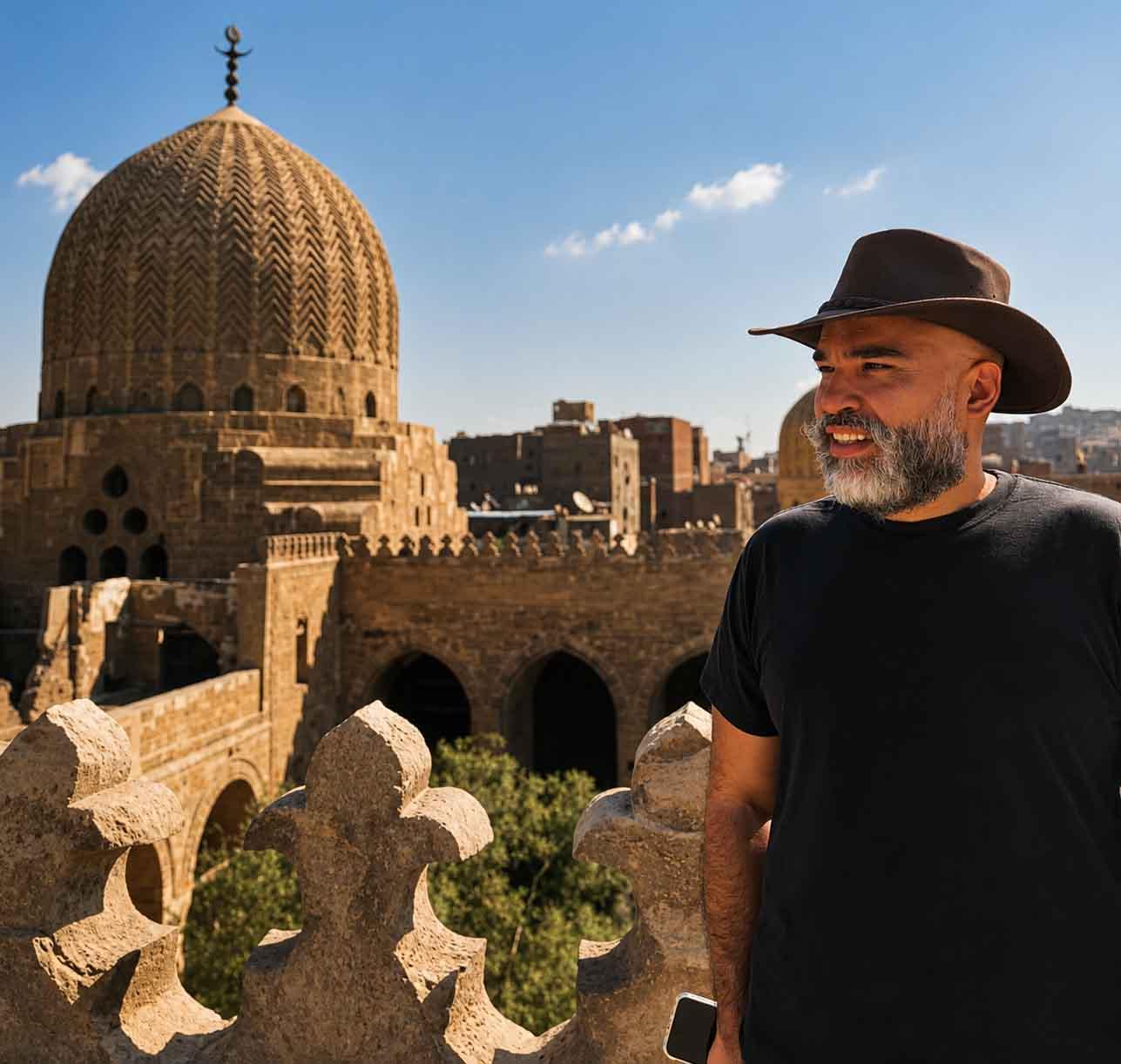
Walk with Tarek: Heritage as a Personal Mission
Which brings us back to the walk. Every Friday, or as close to it as his schedule permits, Tarek El-Gindy does something that might seem incongruous for a man of his professional stature. He laces up his shoes, steps into the medieval streets of Old Cairo or the crumbling grandeur of Khedival Cairo, and walks. Sometimes alone. Sometimes with friends who happen to be ministers, ambassadors, or celebrated figures from Egyptian cultural life. Sometimes with a small group of curious strangers who have discovered the column in He Magazine or by word of mouth, and want to see the city through his eyes.
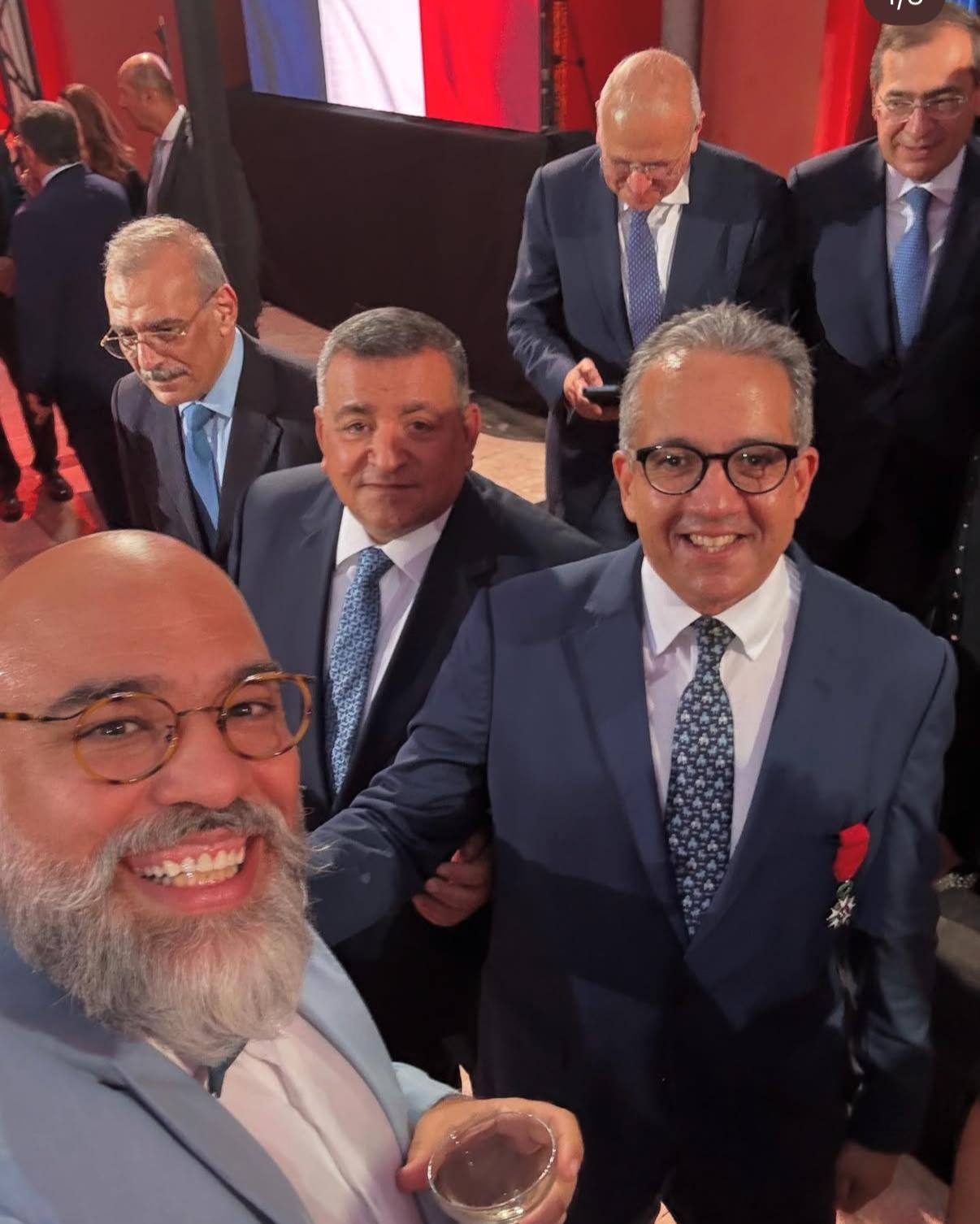
What makes these walks compelling, and why ‘Walk with Tarek’ has become a quietly beloved fixture in the magazine, is the unique depth of perspective he brings to every step. His career exists at a rare intersection where the precision of engineering meets the soul of heritage. Beyond his commercial ventures, he serves as the Secretary-General of the Zahi Hawass Foundation for Antiquities and Heritage, a role that perfectly encapsulates his mission. Whether he is negotiating construction contracts or hosting cultural salons at the Prince Taz Palace, Tarek moves between these worlds with a unique fluidity, seeing Mamluk courtyards not just as relics of the past, but as vital blueprints for the future. For the outside looking in, to him, the stones of Cairo and the steel of a new development are part of the same continuous story.
The walk appears inseparable from the work. Walking with him through a medieval alleyway or beneath an Ottoman archway, you realise he is doing exactly what he does professionally: reading the built environment, understanding what it was, what it is, and what it could be. The difference is that on these walks, he shares his insights on a personal level with anyone willing to come along.
.jpeg)
Nationalism Not as a Slogan, But as a Practice
I want to be careful with the word ‘nationalist’, because it carries freight that does not quite fit Tarek El-Gindy. He is not a man of slogans or platforms, but what is unmistakable in his career and in his writing is a profound and practical love for Egypt, a love expressed not in rhetoric but in the choices he makes about where to invest his time, expertise, and energy.
A network like his, Frankfurt, Singapore, Paris, Wiesbaden, gives a person options. Plenty of Egyptian professionals with far less have built careers entirely abroad, and no one would fault them for it. Tarek has not gone that route. The bulk of his most consequential work remains rooted in Egypt; the strategic plans, the heritage projects, the urban master plans. Whether that is a business calculation, a personal conviction, or simply where his interests have always pulled him, the result is the same.
His role at the Zahi Hawass Foundation is telling in this regard. Hawass himself has spent decades insisting, often loudly, that Egypt’s antiquities belong to Egypt and that the world owes a debt to this civilisation’s legacy. Tarek’s work alongside him, behind the scenes, organising, connecting, creating the spaces where that cultural mission can breathe, is of a piece with his broader outlook. Egypt’s history is not a tourist attraction. It is a living inheritance, and it demands serious stewardship.
.jpeg)
The Low Profile, Deliberately Chosen
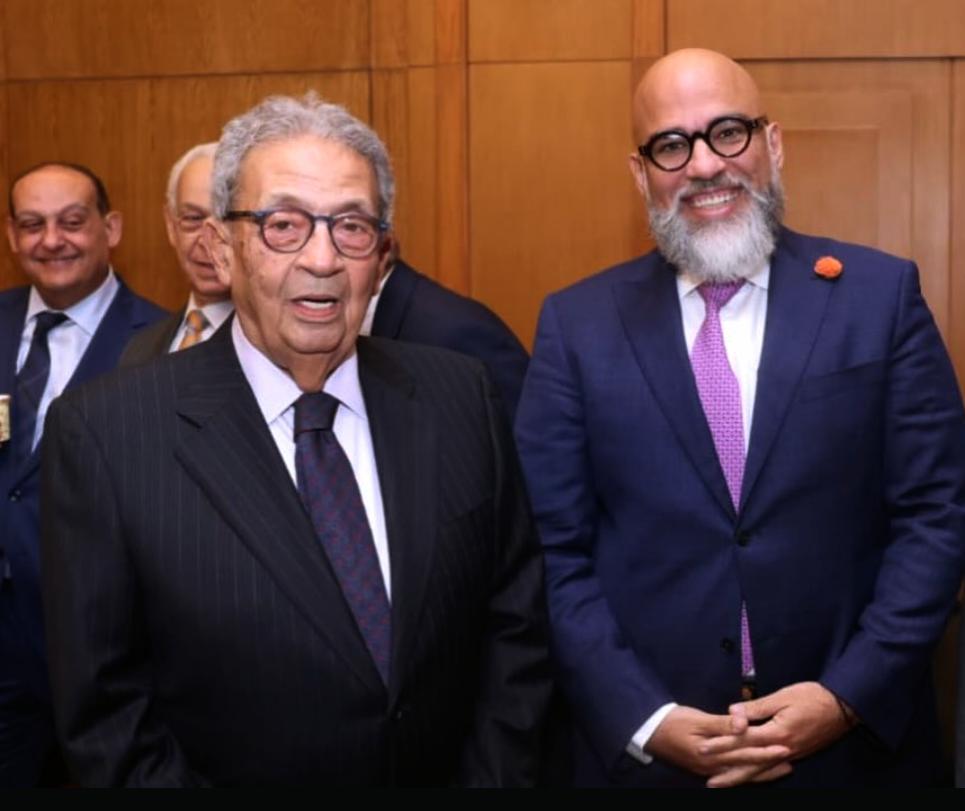
One of the things that struck me most while researching this piece was how low a public profile Tarek El-Gindy maintains relative to the scale of what he has accomplished. He holds board memberships, vice presidencies, and honorary roles across a range of organisations, from commercial real estate to sports. He has ties to former IOC President Jacques Rogge. He moves in circles that encompass ministers, ambassadors, and heads of cultural institutions and yet he is not, in the conventional sense, a public figure.
I think this is intentional. There is a mode of seriousness, common among people who are genuinely accomplished and genuinely engaged with consequential work, that has little time for self-promotion. The work is the point. The project is what matters. Tarek El-Gindy strikes me as someone who has always understood this, and who has chosen depth over visibility at every fork in the road.
That may be about to change. I am told, without being permitted to say more at this stage, that there is a significant project on the horizon, one that will bring his name to a broader public and that represents, in many ways, the culmination of the threads that have run through his career: heritage, urban vision, national pride, and international partnership. When that story is ready to be told, He Magazine will tell it.
.jpeg)
Why He Matters
Egypt is at an inflexion point. The country is investing in its infrastructure, energy security, logistics corridors, and international standing with a seriousness and ambition not seen in generations. At a moment like this, the people who matter most are rarely the ones in front of the cameras. They are often the ones in the meeting rooms, on the construction sites, in the government corridors, and yes, walking through the old city on a Friday morning, looking at the stones and thinking about what was built here, and what might be built again.
Tarek Mahmoud El-Gindy is one of those people. Engineer, entrepreneur, strategic leader, his CV says all three. But spend any time tracing what he has done, and a fuller picture emerges; a man who has spent more than two decades building things that matter, in a country he loves, with a seriousness of purpose that the best kind of patriotism is made of.
I look forward to walking with him again.