Written by: Sabah Awan
Date: 2026-06-24
Watching The Destruction of Gaza In Real-Time
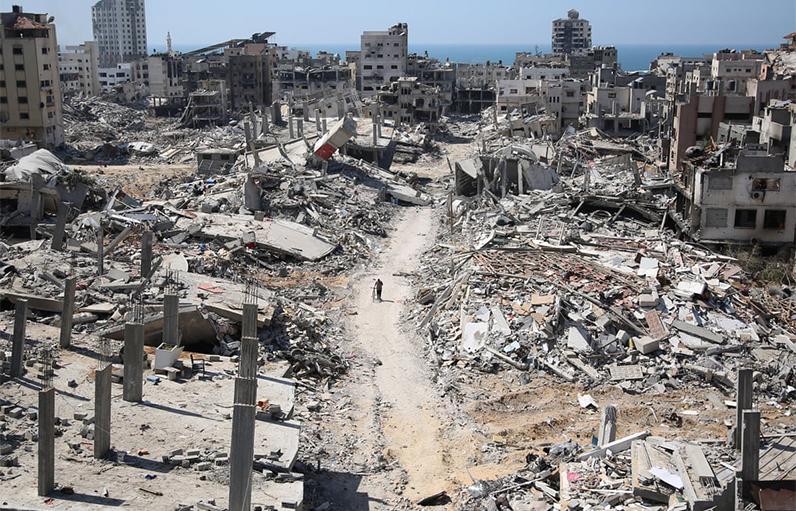
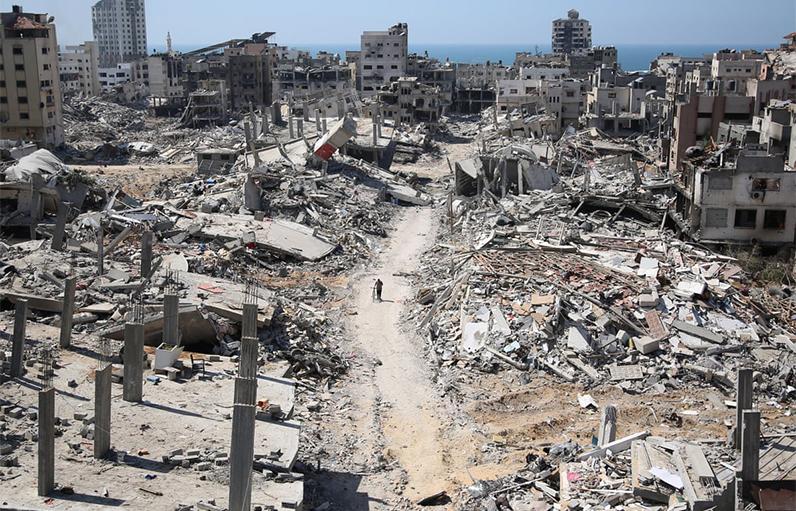
In a society where connection and communication are at our fingertips, we now have access to vast amounts of information through online platforms and social media. This shift has enabled people to receive news and updates directly from a range of sources, offering alternatives to traditional mainstream media outlets. Scrolling through social media with a morning cup of coffee has become the norm and has led to the world watching the destruction of Gaza in real-time. Although social media did not exist during the initial start of the conflict, globally, many people outside of the Middle East and the Muslim world are using this access to information to learn about the history of the conflict between Israel and Palestine. October 7th, 2023, marked the start of one of the most undeniably well-documented genocides the world has witnessed in recent history. Through the power of social media, the ongoing onslaught and displacement of the Palestinian people have been livestreamed, resulting in continued global uproar in the form of boycotts and protests, including in major cities such as London, with the highest number of participants in a single protest recorded to have reached over half a million. The events of October 7th have resulted in an ongoing attack by Israel, resulting in the death of over 72,000 Palestinians, including between 17,000 and 21,000 children. Although media watchdogs have accused mainstream media outlets such as the British Broadcasting Corporation (BBC) of having a pro-Israel bias, the use of platforms such as Instagram has shown the world the reality of what is happening on the ground. Livestream reporting on social media by journalists such as Motaz Azaiza, Plestia Al-Aqad, Anas Al-Sharif and Salah Al-Jafarawi, as well as Bisan Owda, an award-winning journalist, filmmaker and activist based in Gaza, have resulted in the world opening its eyes to atrocities within Palestine that have been ongoing long before the events of October 7th 2023.
Where It All Began: Zionism and the Nakba
To fully comprehend the horrors witnessed on our screens, one must first understand the history of where this conflict began. This story does not begin on October 7th, 2023, but rather stems back to a time during the British Mandate of Palestine, which ended in the year 1948. In 1917, British Foreign Secretary Arthur Balfour wrote a 67-word letter to Lord Rothschild supporting the formation of a Jewish state on Palestinian land. This was a result of an increase in antisemitism across Europe, leading to the rise of political Zionism in the late 1800s, led by Theodor Herzl, an Austro-Hungarian journalist and playwright. The UN proposed dividing Palestinian land into two states—one Arab and one Jewish—with a larger area given to Jews, who were a minority in Palestine. This chain of events led to the Nakba, or “catastrophe”, where over 700,000 Palestinians were displaced from their homes, making up two-thirds of the Palestinian Arab population. This saw the start of a series of displacements occurring over at least seven decades, with Palestinians still not having the right to return to their homes that have now been occupied by Jewish migrants largely originating from Europe, the Middle East, North Africa, and the United States. As of 2021, there are a staggering 8.3 million Palestinians who have been forcibly removed from their homes and now live in the occupied West Bank, East Jerusalem and Gaza, as well as neighbouring Arab countries such as Jordan, Syria and Lebanon. Although the Nakba has been denied by various anti-Palestinian groups, it remains central to the identity of both national Palestinians and those in the diaspora and continues to be a crucial Palestinian grievance to this day.
Revolution and The Rise of Hamas:
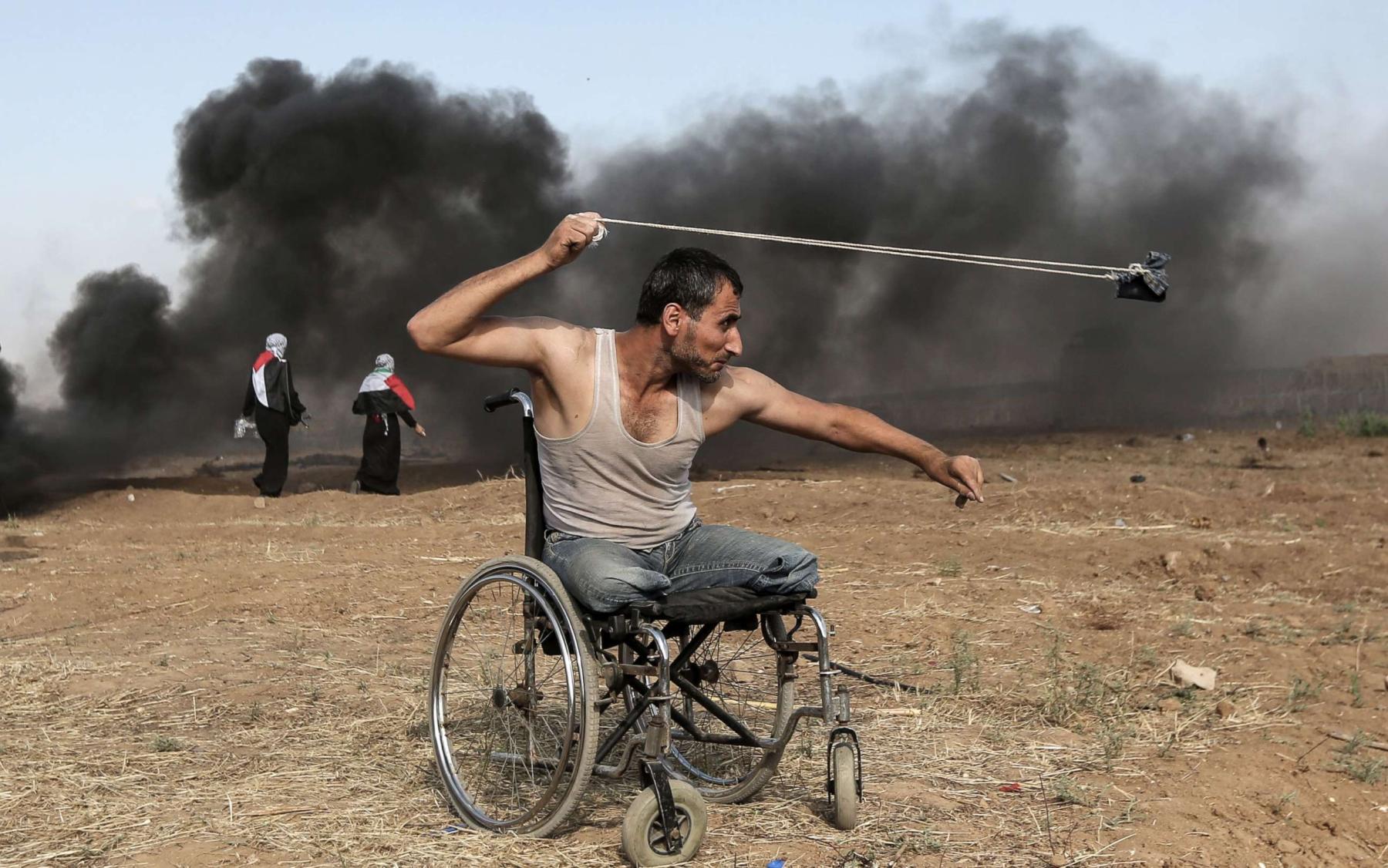
Although at the time, the resistive forces of the Palestinians were localised to the Middle East, the rise in social media has globalised the resistance and a demand to end decades of colonisation at the hands of Israel. The year 1987 saw the inception of the First Intifada or “uprising”, which was the result of increasing frustration amongst the Palestinians, especially amongst the younger population that had been born under the occupation. Increasing frustrations led to thousands of men, women and children taking to the streets to conduct protests, often throwing rocks as a form of attack, as Palestine did not have a military presence. Retaliation from the Israeli army included curfews imposed on towns and refugee camps, mass arrests and detentions and the use of live ammunition, highlighting the stark difference of the clashes between civilians bearing stones and a fully equipped army. This resulted in conflicts that ended in the loss of between 1000 and 1500 Palestinian lives and over 120,000 injuries in the years between 1987 and 1993. The First Intifada saw the creation of Hamas in 1987, which has roots stemming from Palestinian nationalism as well as Islamic ideologies calling for the end of Israeli occupation. Hamas was involved in organising protests, community support and carrying out attacks against Israeli targets, followed by a political shift that resulted in Hamas securing the 2006 elections, transitioning from a resistance movement to political governance. Today, Hamas has been accused of being a terrorist organisation by Western media outlets and has now become the prime target of Israeli aggression.
The Oslo Accords and The Second Intifada:
The First Intifada ended with the establishment of the Oslo Accords in 1993, which saw Israel recognise the Palestine Liberation Organisation (PLO) and the Palestinians recognising Israel’s right to exist. Despite the signing of the agreement, which Hamas rebuked, there was a continued increase in illegal Israeli settlements in the West Bank, and Palestinians continued to have limited autonomy over their land. Rising frustrations and tension eventually led to the Second Intifada, which took place between 2000 and 2005, and saw a higher level of violence than the previous uprising, resulting in an increased response from the Israeli Army. Israeli targeted killings and airstrikes led to the creation of the West Bank separation barrier and the termination of the Oslo Accords. The number of deaths on both sides increased significantly compared to the First Intifada, with numbers reaching approximately 5000 Palestinian deaths and around 1000 Israeli deaths. There was also widespread destruction, including over 5000 Palestinian homes being destroyed, and around another 6500 severely damaged, no longer remaining inhabitable. The Second Intifada ended in 2005, following agreements between Palestinian President Mahmoud Abbas and Israeli Prime Minister Ariel Sharon, and later saw the withdrawal of the Israeli military forces and settlers from Gaza.
Hamas’ Attack on Israel:
In the early hours of the morning on October 7th 2023, Hamas launched an attack on Israeli towns, military bases and communities near Gaza, resulting in the deaths of around 1200 Israeli civilians and soldiers. Around 250 Israelis were kidnapped as leverage, demanding the release of Palestinians who had been incarcerated in Israeli jails. Hamas’ intentions for these attacks stemmed from rising tensions around the Al-Aqsa Mosque in Jerusalem and the West Bank and the blockade of Gaza. Although Israel was initially surprised by the attack, it retaliated by conducting ground invasions and aerial bombardment targeting Hamas leaders, which led to a high number of civilian casualties and widespread destruction of infrastructure across Gaza. Israel enforced a complete siege in Gaza, including cutting off electricity, food, fuel and water supplies, which resulted in a humanitarian crisis in Gaza which continues to this day. Ground invasions began in Northern Gaza and subsequently resulted in the displacement of around 1.9 million people, making up 90% of the population, as of April 2026.
Stories That Shook the World:
One of the most significant stories that emerged during the conflict between Hamas and Israel is that of six-year-old Hind Rajab, who was in the process of evacuating the Tel al-Hawa neighbourhood in south-western Gaza alongside her four cousins, aunt and uncle when Israeli forces invaded. An IDF unit fired shots at their car, resulting in the deaths of all involved except Hind and her fifteen-year-old cousin, Layan Hamada, who made an urgent call to the Palestinian Red Crescent Society (PRCS) requesting support as Israeli tanks were edging closer to the car. Seconds later, gunshots were heard, killing Layan and leaving Hind Rajab stranded alone and terrified in the car. PRCS were on the call to Hind whilst simultaneously attempting to gain permission from Israeli forces to send paramedics to the location to save her. Whilst on the call, Hind repeatedly asked for help, claiming, “I’m not talking because every time I talk, blood comes out of my mouth and makes my clothes dirty, and I don’t want my mom to have to clean it,” showcasing the innocence of a child caught up in the tensions between opposing sides in the region. Once permission was granted, paramedics from Al-Ahli hospital, Yusuf Al-Zeino and Ahmed Al-Madhoun, were on their way to rescue Hind, never to be heard from again. Two weeks later, when the IDF had evacuated the area, the decomposing bodies of Hind, Layan and their family members were discovered with the burnt PRCS ambulance alongside the bodies of Yusuf and Ahmed, which were located a few meters away. An investigation, conducted by Forensic Architecture into this event, showed a total of 355 bullets were fired at the car, with 64 of those shots being fired at Layan while she was already on the call to PRCS. It was also found that both children were in view of the attacking IDF unit, which widely publicised the dangers that Palestinian civilians have faced, particularly children.
Continued destruction of Gaza had a significant impact on the medical services available for civilians harmed during this time. With medical facilities such as Al-Shifa Hospital in Gaza City and Nasser Hospital in Khan Younis being surrounded and attacked until they no longer remained functional. The struggling medical aid available on the ground was further perpetuated by the killing of doctors such as Dr Hammam Alloh, a kidney specialist at Al-Shifa Hospital, who refused to evacuate to care for his patients, stating, “You think I went to medical school and for my postgraduate degrees for a total of fourteen years so I think only about my own life and not my patients?” which demonstrates the unbreakable courage of the Palestinian people. On December 27th 2024, the director of the Kamal Adwan Hospital – the last standing hospital in Northern Gaza, Dr Hussam Abu-Safiya, was kidnapped by Israel alongside other medical staff and patients. Despite facing personal adversities such as the death of his son by an Israeli airstrike and the ongoing destruction of medical facilities, Dr Abu-Safiya continued to care for patients with the limited medical resources and aid available at the time. On February 11th 2025, Israeli forces granted permission for Dr Abu-Safiya to meet with legal representatives who stated that detained medical staff were dealing with repeated beatings and abuse at the hands of the Israeli Prison Service, including restrictions placed on access to food, hygiene and adequate medical care. This kidnapping further highlights Israel’s continued efforts to dismantle medical care available in Gaza.
Silencing of Journalists:
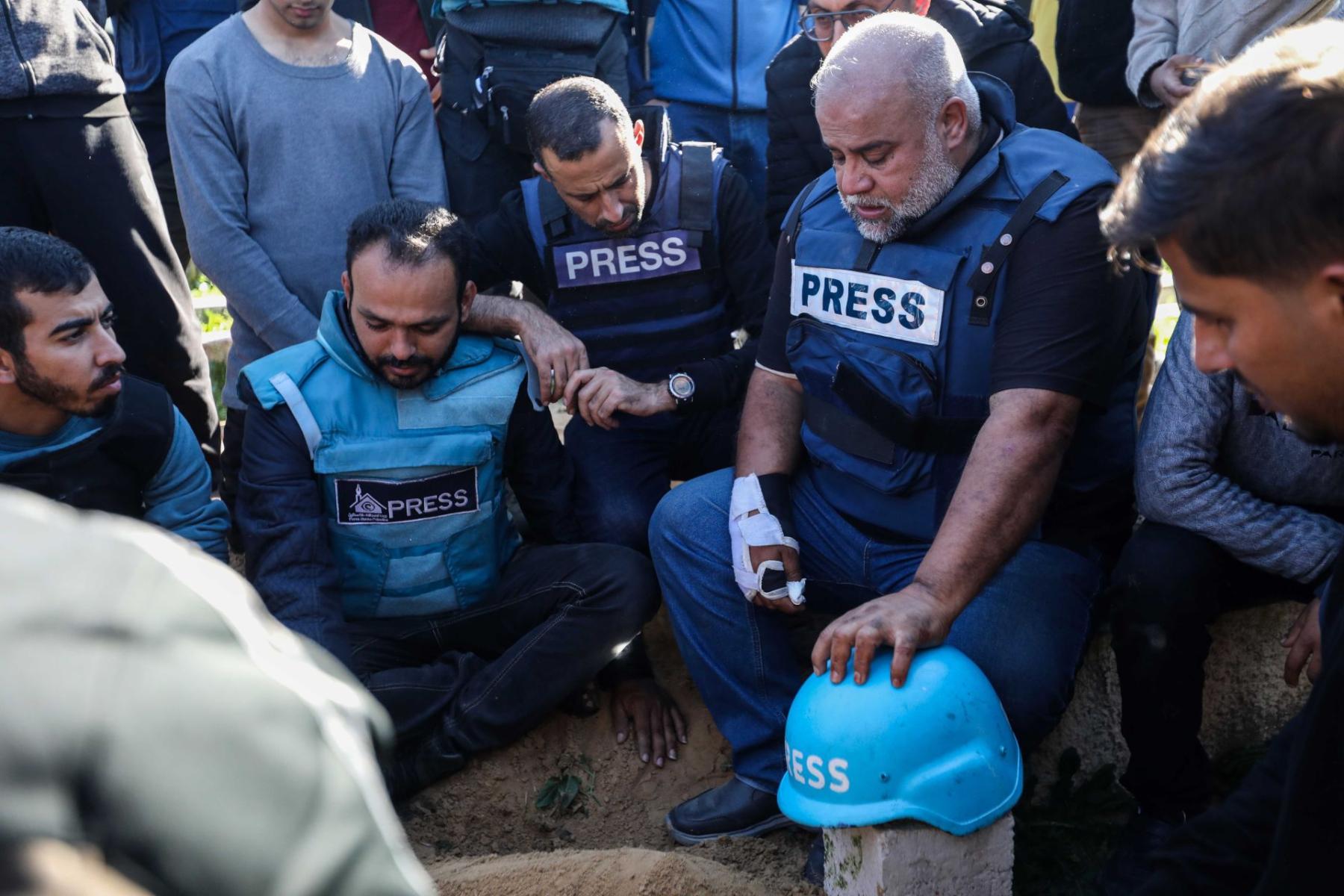
As of April 2026, it is reported that between 260 and 270 Palestinian journalists have lost their lives in Gaza, with some identified as members of the press by wearing clearly labelled “Press” vests at the time of their death. The regular death threats aimed at journalists such as Wael Al-Dahdhouh, Anas Al-Sharif and Saleh Al-Jafarawi did not hinder their efforts in showcasing the plight of the Palestinians to global audiences, which highlights the courage of such individuals. Despite the threats and the killing of his father following an attack on his home, journalist Anas Al-Sharif continued to highlight the atrocities committed by Israel until he was killed alongside five other journalists, on August 10th 2025, following a direct attack by the IDF on their tent near Al-Shifa Hospital in Gaza City. Widespread mourning amongst pro-Palestinian supporters worldwide ensued, which was further exacerbated by the death of journalist Saleh Al-Jafarawi on October 12th, 2025, who was killed by gunfire during clashes between Hamas and a local militia group.
The Conflict Today:
As of October 10th, 2025, an initial ceasefire has been agreed upon, encouraged by nations such as the United States, Qatar, Turkey and Egypt, with a second plan instigated on January 14th, 2026. The ceasefire agreements aim towards lasting peace in the region and the reconstruction of Gaza. Reports have emerged of ongoing conflict and continued Israeli strikes. The ceasefire initiated the increase in humanitarian aid reaching Gaza, including significant aid delivery reported in the Gaza Strip in early 2026. However, Israel continues its genocidal actions in southern Lebanon, where over 400,000 people have been displaced, and hundreds have been killed in the crossfire between Hezbollah and the IDF. Although the US brokered a ceasefire in April 2026, Israel continues to declare its right to self-defence amidst ongoing clashes.
Throughout the conflict, major tech companies such as Meta (which owns Facebook and Instagram) have been accused of shadow-banning, an act where media content from specific users or containing specific words linked to the genocide has reduced visibility, thus not reaching larger audiences. Accounts belonging to prominent activists and journalists have also been banned, including Meta permanently removing the Instagram account of Saleh Al-Jafarawi, just after his death. This further fuels the belief that leaders of social media platforms are deliberately silencing the voices of the Palestinian people and thus further perpetuating the genocidal actions of Israel. As spectators, we have the privilege to switch off our phones and look away from these atrocities, but for those living in Gaza, it is a reality that they cannot escape.