Written by: Sabah Awan
Date: 2025-12-25
Sunny Al Noamany on Turning Egyptian History into Living Art
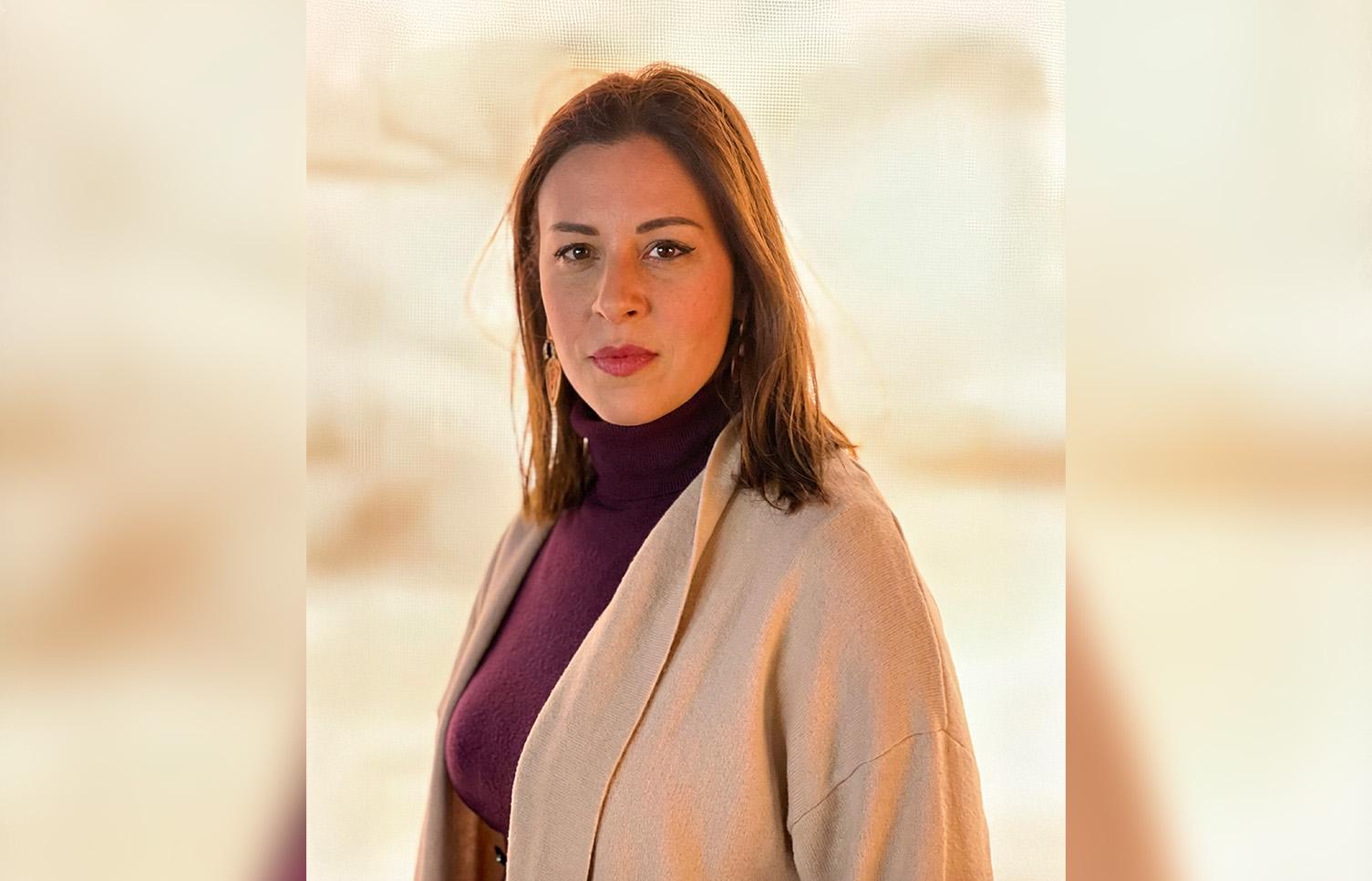
Saridah – stemming from the Arabic term al-sard meaning narration or storytelling is an art and design brand that redefines cultural design in Egypt by combining art with Egypt’s rich history. From the love story of King Ramses II and Queen Nefertari to The Mamluks, Saridah incorporates centuries old stories into beautiful products ranging from tableware and linens to games, each bringing history to life from an artistic perspective. In this interview, the founder Sanaa Al Noamany shares the stories behind the brand, the inspiration drawn from Egypt’s past, and the mission to bring heritage into everyday living.
Could you please tell me a little about yourself. What is your background?
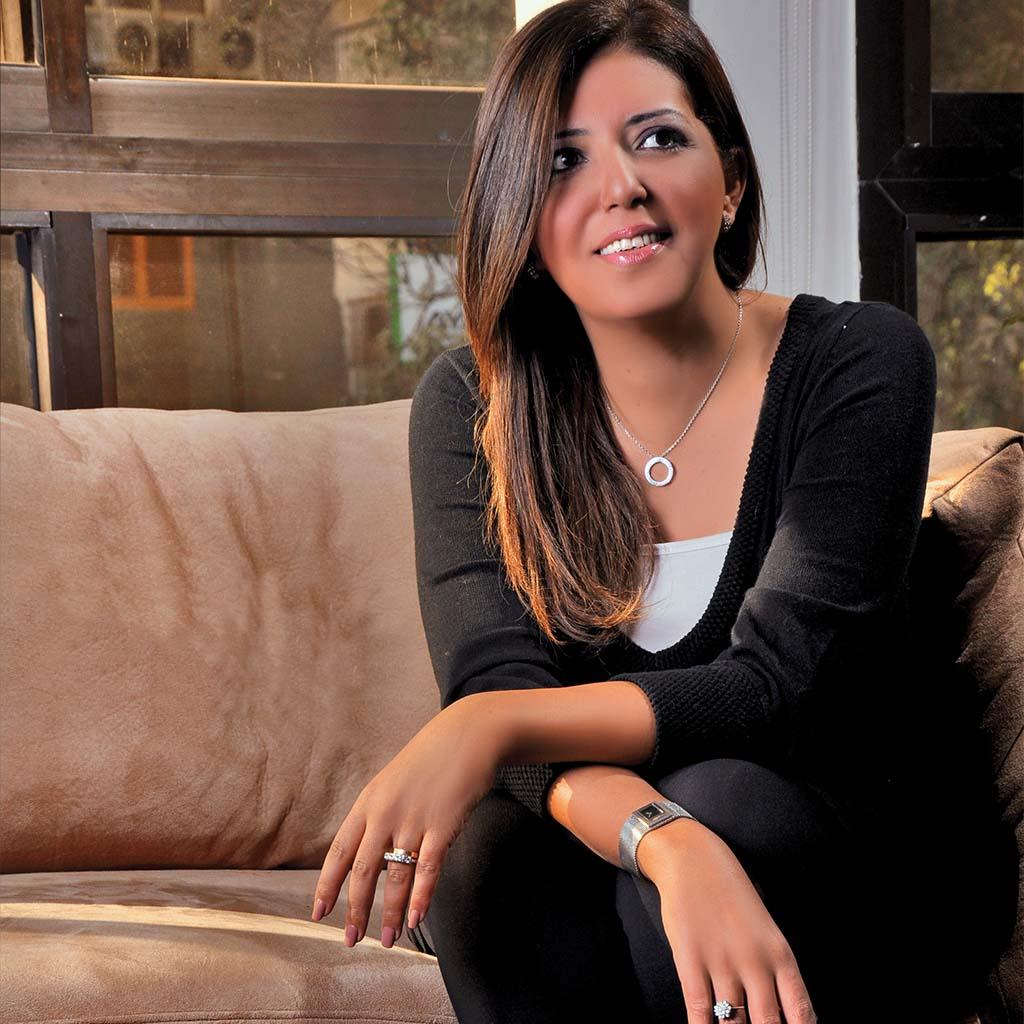
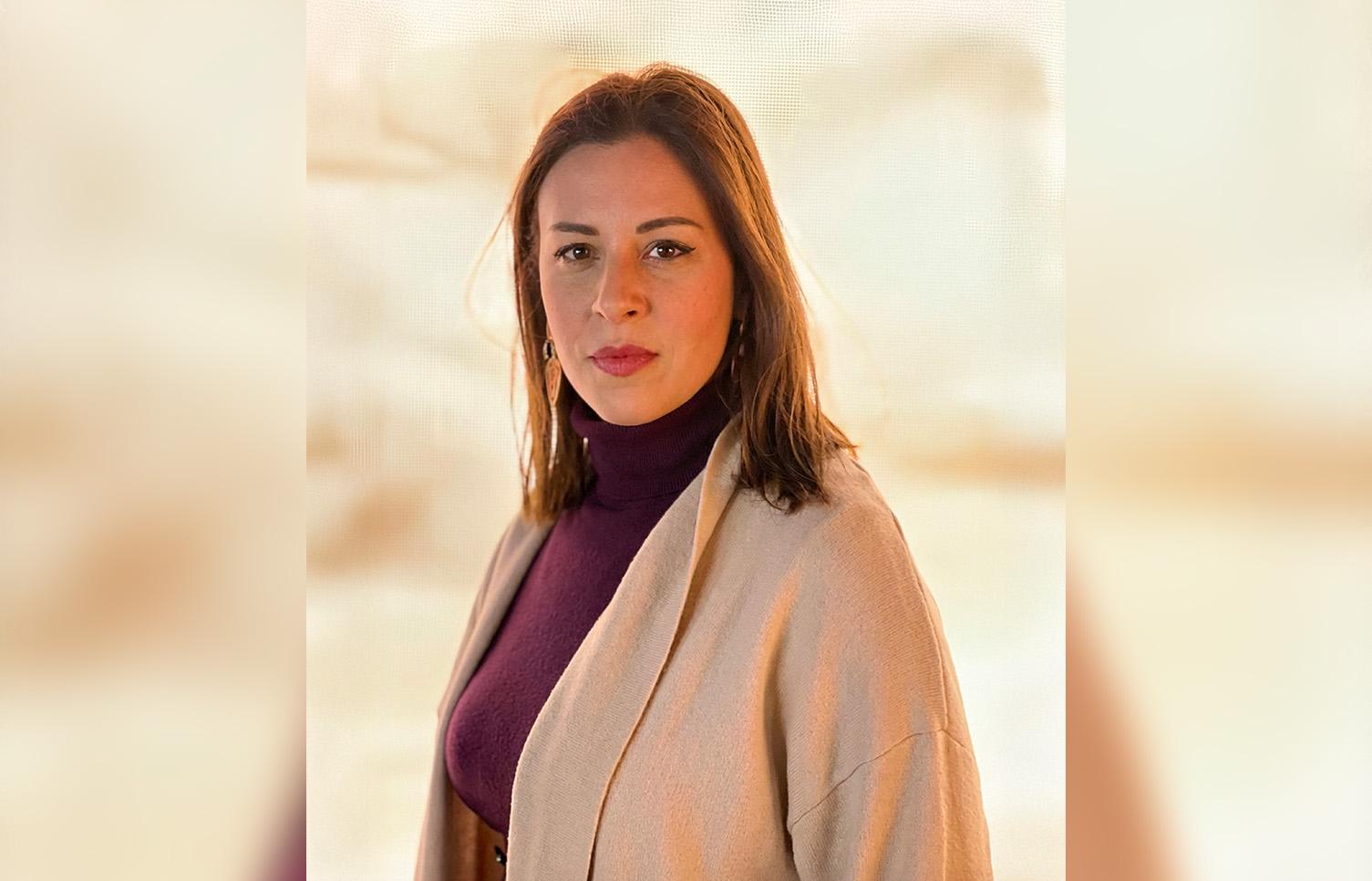
Yes of course! I am a wife and mother to two beautiful daughters, and my family are my biggest inspiration behind starting Saridah. As a proud Egyptian woman, I have always felt it is important for my daughters to know their roots and be proud of their heritage which inspired me to start this brand. I have a bachelor’s degree in arts and integrated marketing as well as a minor in business and I have also achieved an MBA From Edinburgh Business School. I have always had an interest in art from a young age where I was always involved in various art competitions throughout my time in school, which has led my daughter to also develop an interest in art.
What inspired you to start Saridah?
My husband really wanted our daughter to have some passion for history, and I was also very concerned with my daughter honouring her identity as an Egyptian. These concerns led to me coming up with the idea of incorporating my daughter’s love of art, my creative flair and mine and my husband’s love of history to come up with Saridah. I started off by using paper instead of a placemat when having meals with my daughter where we would draw and talk about basic motifs. I first introduced her to the Ankh which we used to talk about and practice drawing on the placemat, we then moved onto Ain Horus – The Eye of Horus before talking about Bastet (or Bast), the ancient Egyptian goddess that represented protection, fertility and home life. Two years later when we visited the Pharaonic Village, I pointed out a cat to my daughter, and she corrected me and named the cat as Bast. I was very impressed that she remembered the name after two years of drawing the Pharaonic cat and this led me to realise it is an excellent technique for learning for young children and I wanted to share this idea with others. Once I created some basic items, I visited a couple of bazaars where I sold my collection, and I had received excellent feedback on my products which led me to formalising the company before expanding my collection.
How has your husband Tarek El Gindy’s interest in historic Cairo inspired your products?
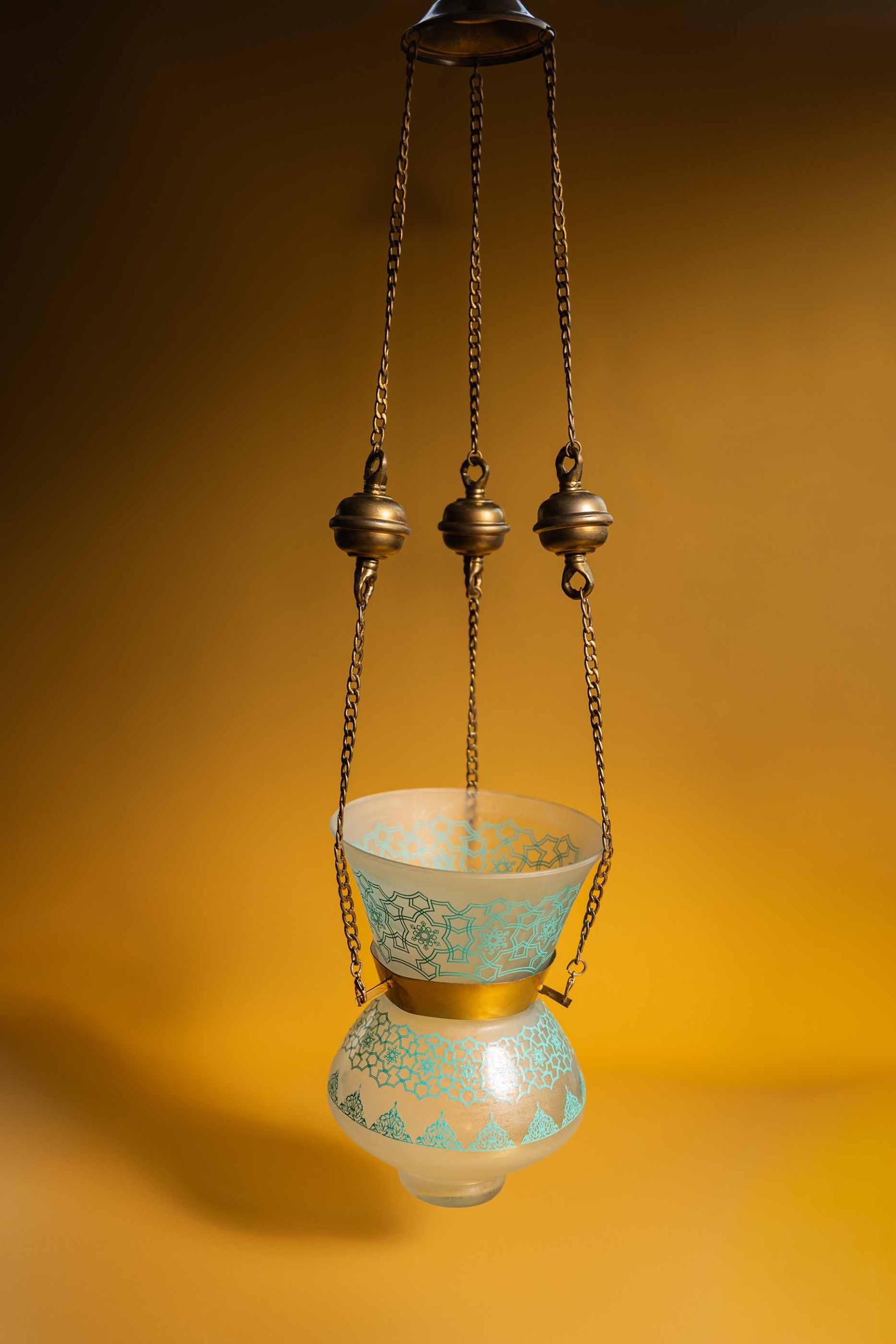
My husband has always had an interest in collecting rare books and looking after them to the point where he does not like his collection to be touched, so that they do not become damaged. This also links to his deep interest in history as well as Egyptology where not only does he attend excavations, but he also goes on weekly walks around Islamic Cairo where he makes new discoveries. He then comes home and is keen to share them with our children, and after hearing the stories I was interested in documenting them so that others can also learn about these discoveries but in a fun way. Sometimes I even take his photos and use them as inspiration for my drawings where I can incorporate an old heritage pattern and make it appealing for future generations retelling history with a contemporary touch.
What is Saridah’s mission, and how has it evolved since the beginning?
Saridah’s mission is to make history appealing for future generations and to educate all Egyptian homes with the basic understanding of motifs of different eras of Egypt. We focus on tackling history from the artistic side where we narrate stories about lifestyle, myths, beliefs and how they contributed to art as we believe art is a dialogue that narrates key parts of history. Each piece has its own narrative, capturing our customers’ interest and appealing to every generation.
What recent projects or achievements are you most proud of?
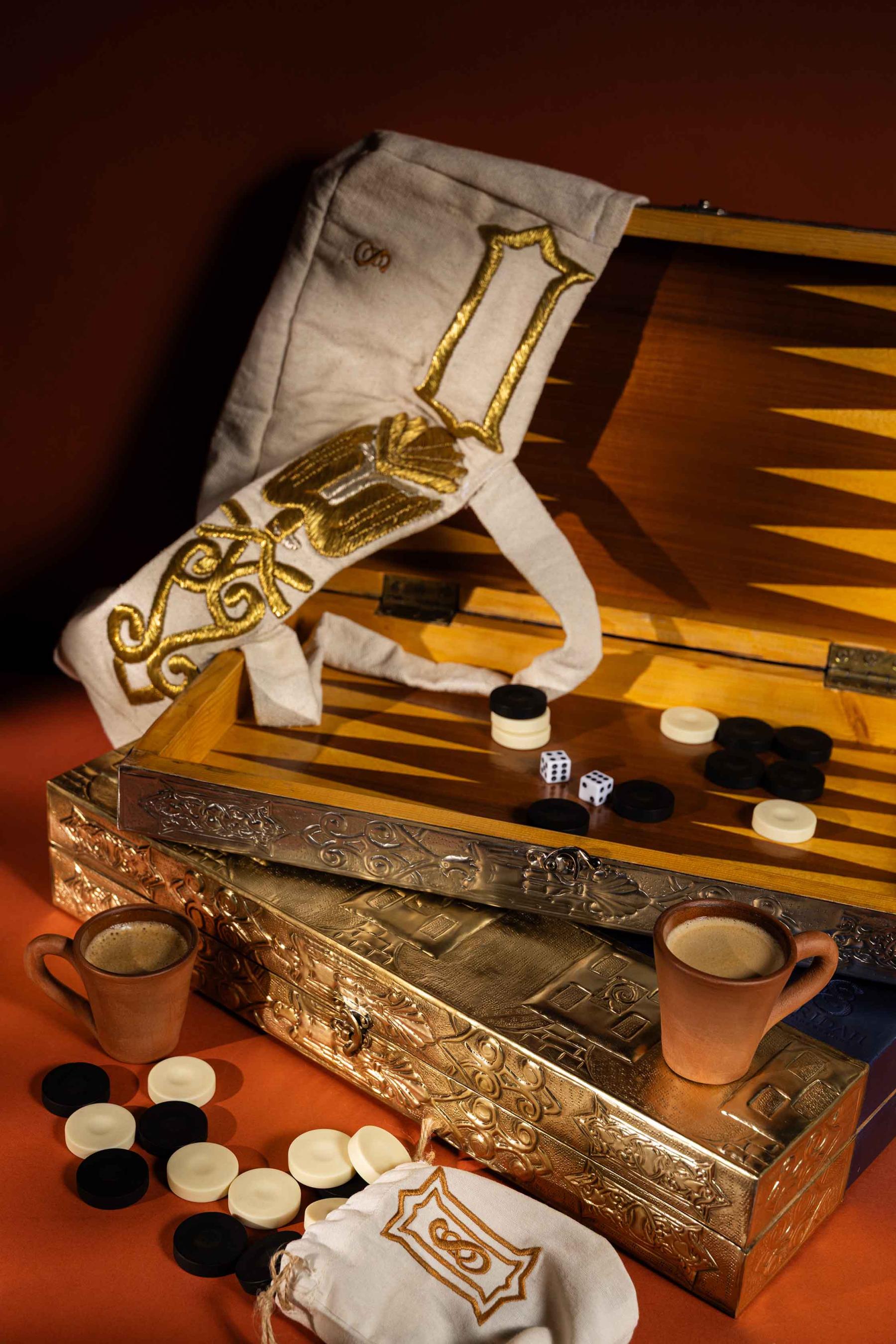
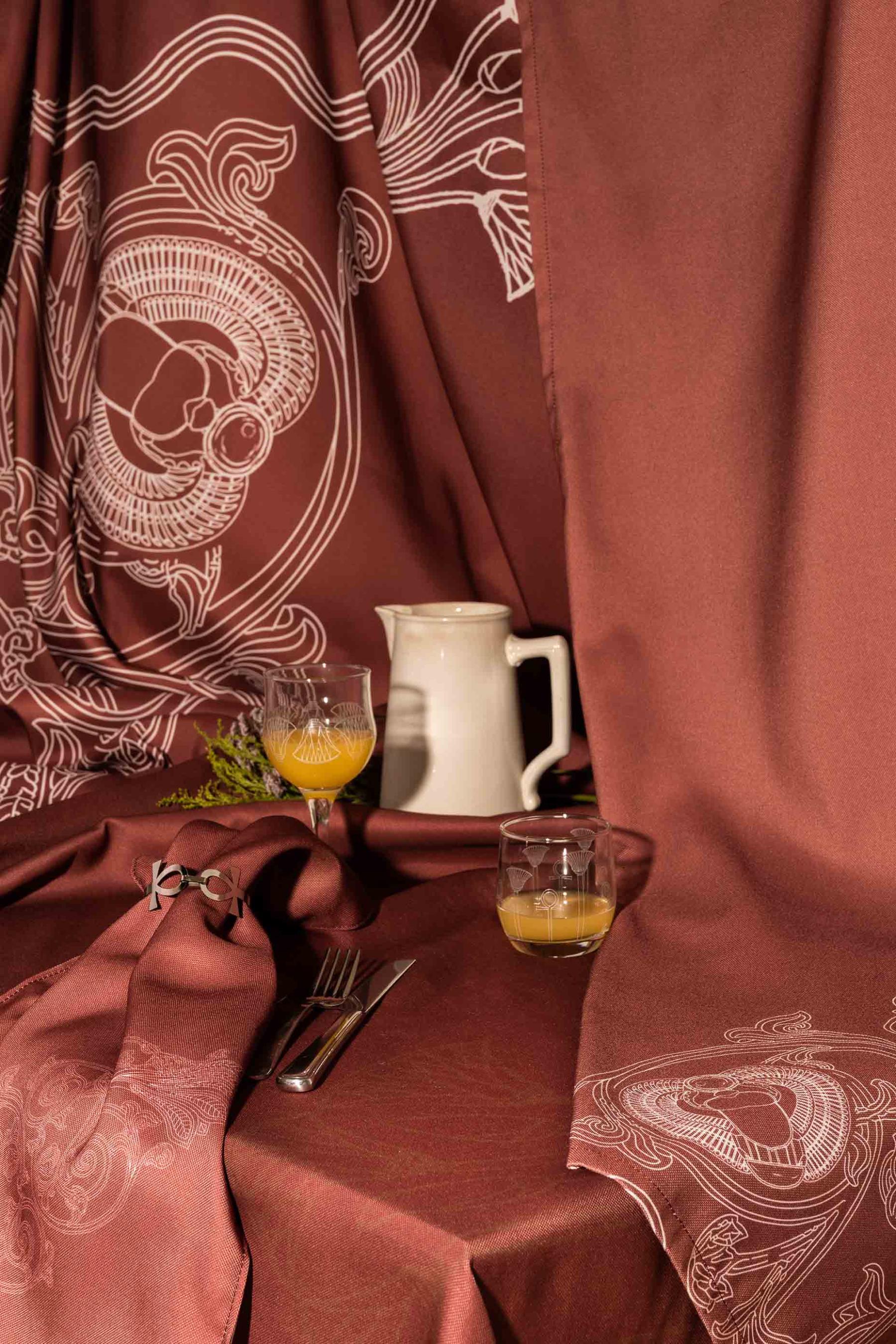
I am proud of everything but the thing I am most proud of is the range of products that I have created as I am not tied to one specific category. I am also proud that I able to help women not only decorate their homes but also educate their families. I am trying to make her house fun with the tumblers and games; I am trying to make her house elegant with the collections of linens and tableware for example the Ancient Egypt’s Good Luck symbols placemat which was my first item that I released as part of my collection. I am also decorating her house and offering her house items that pique the interest of her guests such as the King Ramses II backgammon which has a hand drawn pattern that has been handcrafted with an elegant, embroidered bag to go with it. I feel proud that I am moving along with the mother in every aspect of her home.
What major milestones has Saridah reached since its launch?
I think for me the acceptance of the idea and the products is the biggest milestone I have reached, to think that an idea I had in my mind has been accepted by my customers has made me proud. Also, in a short period of time I have been recognised by a reputable newspaper Al Masry Al Youm where the article of my business was featured on the front page and I was also interviewed on a well-known programme known as 4 Sharia Sherif. I am also pleased to have my business featured in He Magazine which is also another major milestone as it is a magazine that has been in the market for over 25 years. I am also excited that my products are being featured in the gift shop at the Grand Egyptian Museum which I am hoping will be seen by visitors to the museum and can strengthen the reputation of my business.
Are there any social, environmental, or cultural initiatives you’re involved in?
As part of Saridah’s mission, we have made sure we offer labour opportunities as part of our production process to various NGOs to ensure those that are less fortunate are given employment opportunities. We have previously worked with a breast cancer initiative where were involved in spreading awareness and gathering cashback on our orders and we also made sure we donated to the cause.
What do you hope people feel when they bring a Saridah piece into their home?
I want the mothers to be proud of our products and for them to show their guests, not just store them away in a cupboard. I would be very happy if someone told me they are putting my backgammon set on their coffee table in the living room so that it can become a part of their daily life and they can share the product and its story with their guests. I also want to give mothers the opportunity to use my products to teach their families about Egypt’s history, the very thing that inspired me to start this art and design brand.
Where do you hope to take Saridah in the next five years for example: are there plans to expand into new product categories or international markets?
We hope to expand our product range by introducing apparel soon as well as accessories, for example we are currently working on the release of bag charms. We are also releasing our products soon in Germany and we would like to expand into the European and International market and for our brand to be a household name whether in Egypt or around the world.
What are some of the stories behind some of your collections?
Our latest collection is based around the love story between Ramses II and Queen Nefertari which is an unusual love story as we do not hear love stories between Ancient Egyptian kings and queens very often. She was important to him as she shared his rule, and he treated her like a companion equally deserving of respect. She held the title “lady of two lands” which was a title typically given to kings not queens which shows evidence of his love for her. There are also affectionate inscriptions dedicated to her which are engraved in her temple – the Small Temple of Abu Simbel, one such statement is “the one for whom the sun shines”. He also referred to her as “the lady of grace” which is another inscription found in her temple. The inspiration behind this collection links to the Grand Egyptian Museum where there is a statue of Ramses II that is one of the iconic pieces at the museum and our brand tells his story in a non-traditional way.
Saridah’s products can be purchased at the gift shop at the Grand Egyptian Museum as well as various stores located in Egypt and online at www.saridah.com.